What is holding?
The in-between hours of a film set.
If you've ever watched a movie and wondered where the background artists come from, the answer is usually the same: Crowd Holding.
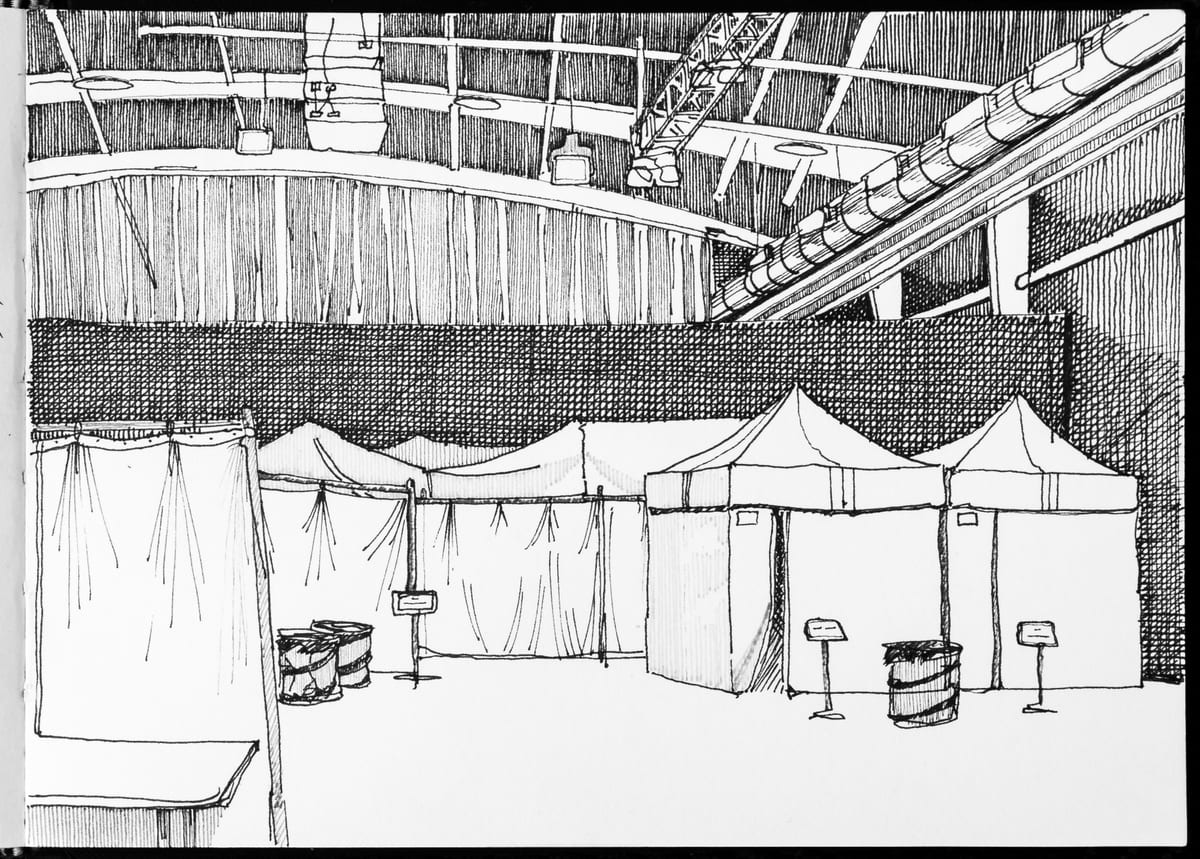
Holding is the waiting area on a film or television set. It's where Supporting Artists — the background performers who populate every street, pub, hospital corridor and battle scene you've ever watched — spend most of their working day. A tent in a car park. A school canteen commandeered for the week. A draughty corridor in a country house. A row of chairs in the unlit wings of a sound stage at Elstree.
You arrive. You wait. You get called to set. A few takes. Then back again. Back to holding.
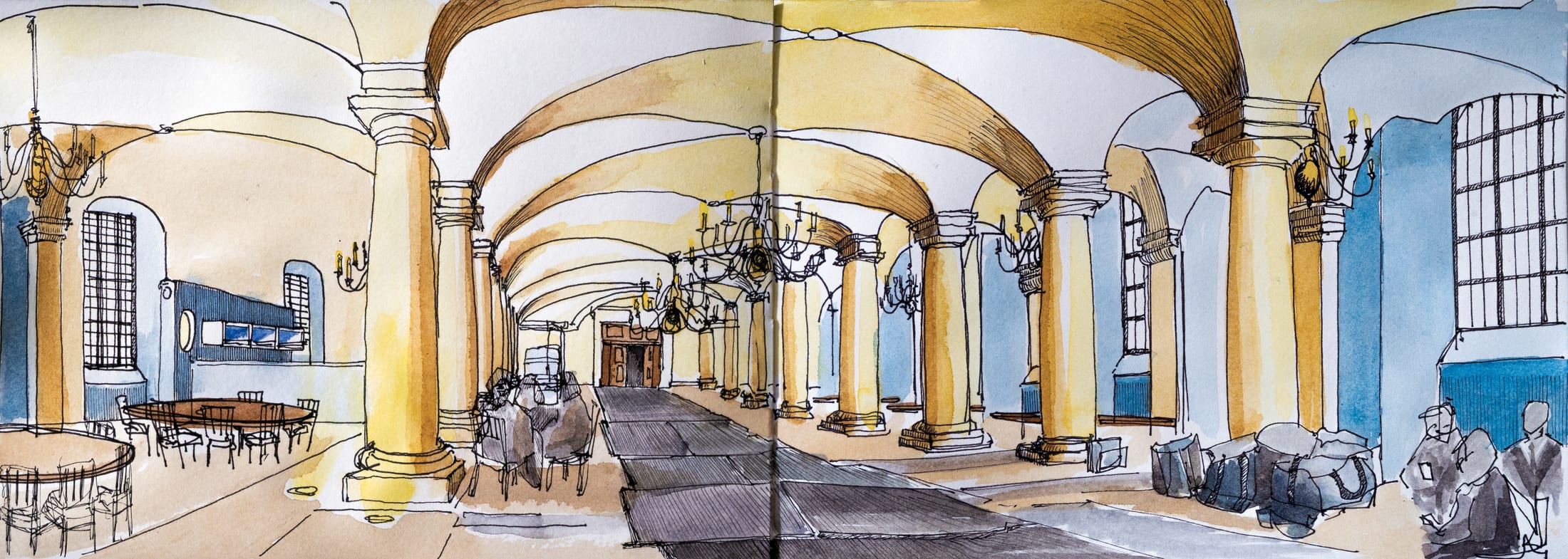
What it actually feels like
A twelve hour day might contain five hours of filming. The rest is waiting: for HMU & Costume, for the Crew to arrive, for the AD to come and get you. Time stretches. The food might be good, or not. There's always Nescafe granules. People read, sleep, chat. Some do it for years. Some quit after one job.
I've been doing it since 2022. My first job was playing the British rowing coach at the 1936 Berlin Olympics in George Clooney's Boys In The Boat. I was hooked. I've been on productions big and small, in studios and on location, in ITV crime dramas and Hollywood blockbusters. And in all of that time, the thing that has stayed the same is holding.
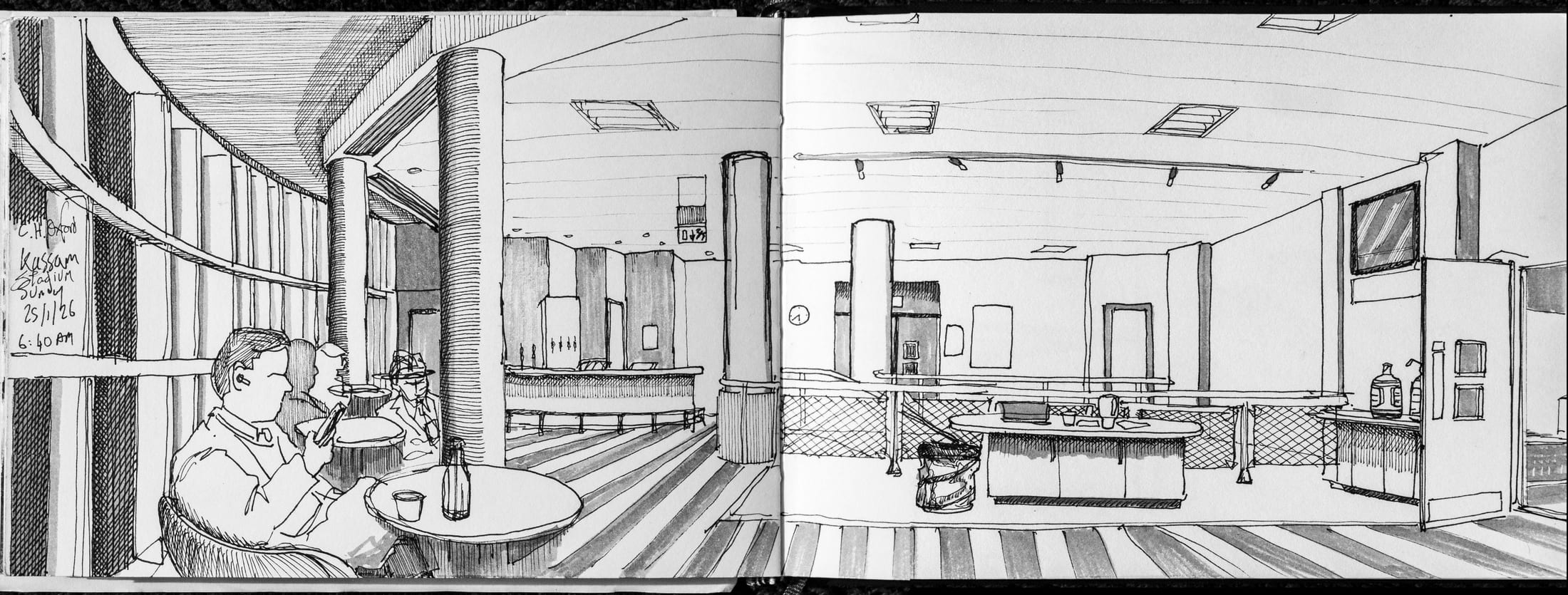
Why you can't have your phone
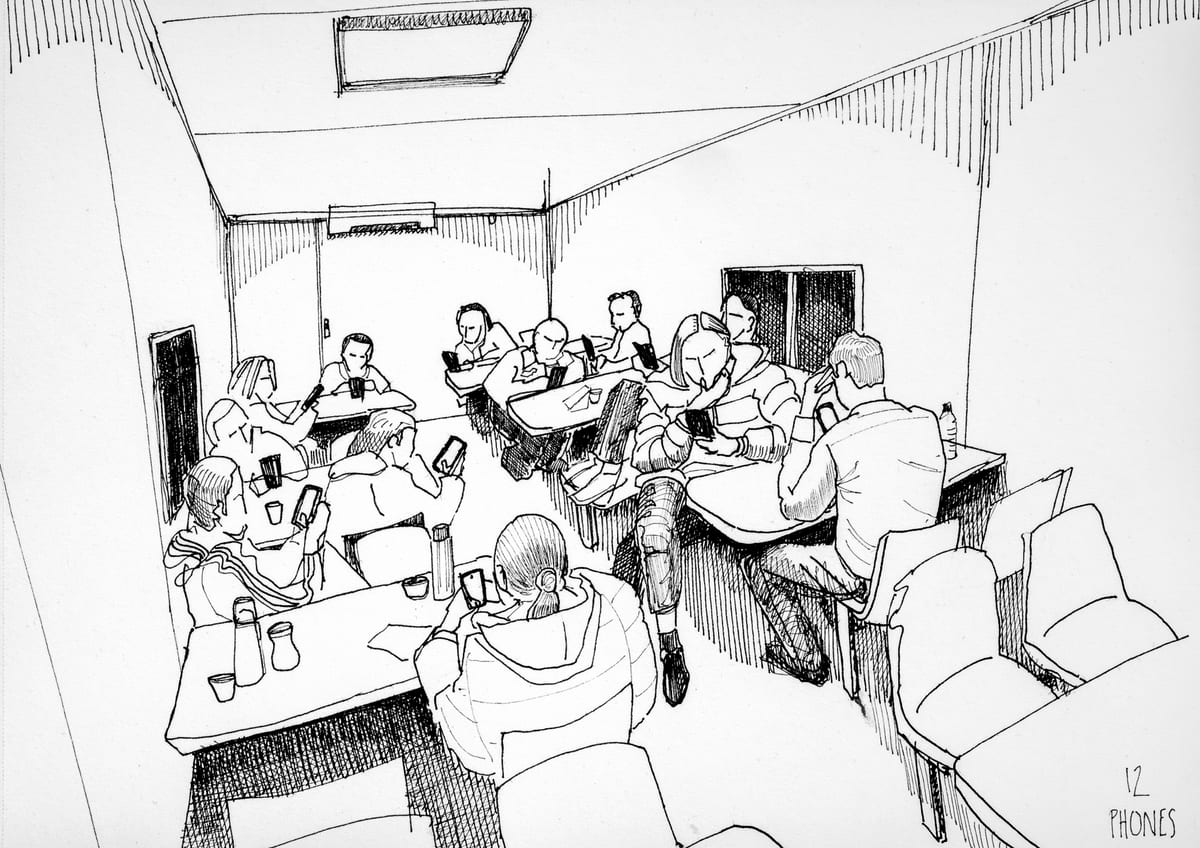
At sign-in, invariably, phones are surrendered to Security. Productions are wary of leaks; a snap of an actor, a costume, a prop can be live on the internet within seconds. You can work on an incredible set for hours and leave with nothing but the memory of it.
That means the background crowd — the people who are there, closer to the action than almost anyone else — have no way to record what they're seeing. The mundanity, the care, the absurdity, the beauty of what it takes to make movies: invisible to the people outside it.
Why I started drawing
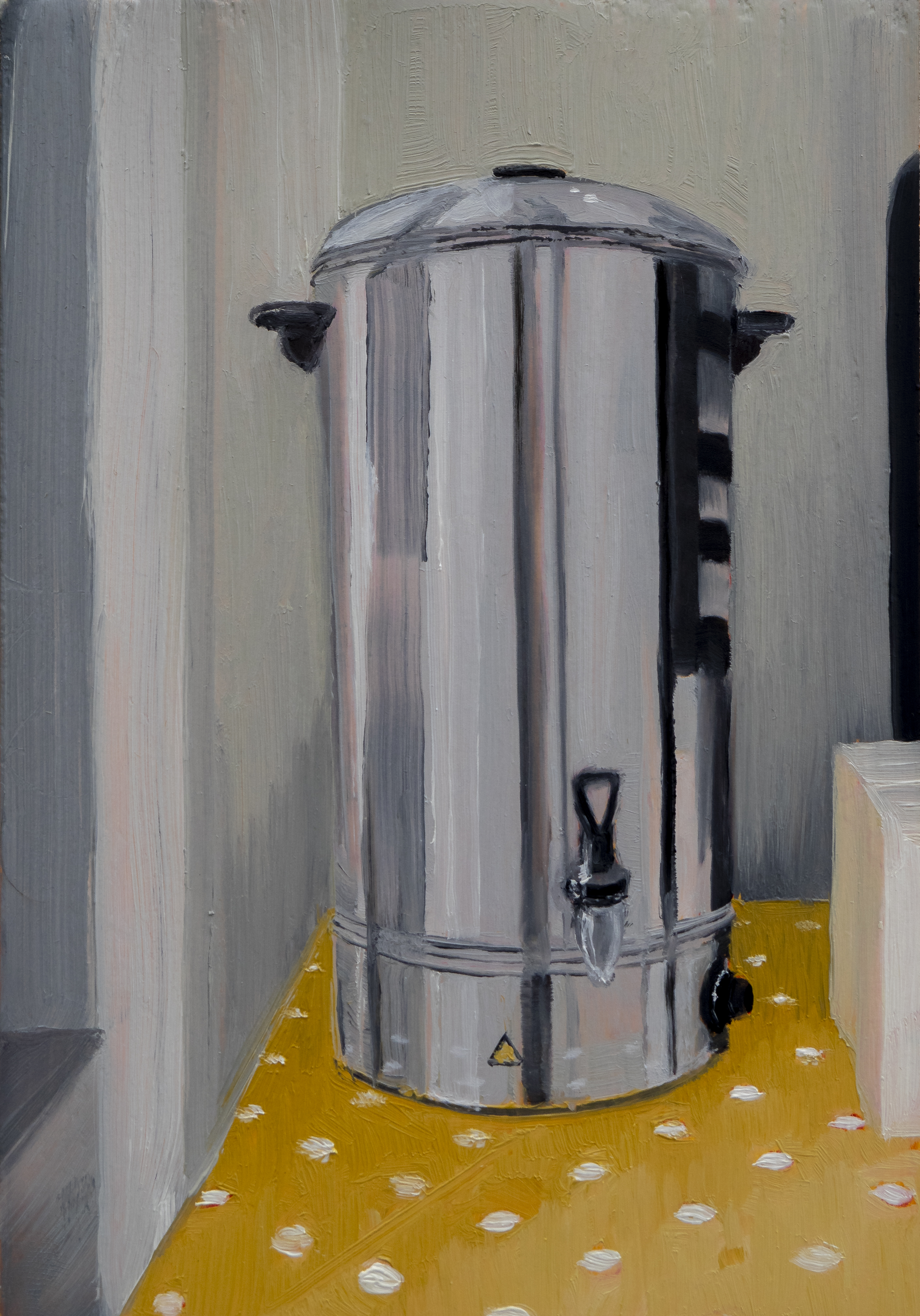
I've done a few different things — corporate M&A, pro yachtsman, rock band tour manager. Long hours of a different kind. When I came to the movie industry as an SA, [‘Extra’ upsets people, apparently] I found I was spending a lot of time sitting in holding with nothing to do and nowhere for my attention to go.
So I started drawing.
Not to become an artist — I'd always drawn, it was just something I did. But in Holding it became something else.
“If you look at things with a pencil and paper in your hand, you are going to see far more.”
DAVID HOCKNEY
Sketching is my way of paying attention. The angle of a folding chair. The way light comes through the plastic skin of a tent at dawn. A coat folded into a pillow. The faces of people doing the same job, chatting or sleeping with their heads on their coats.
Some ADs [Assistant Directors] have separately told me I am the Banksy of the Background. I don't know about that. But I do know that someone had to draw it.
What the work is
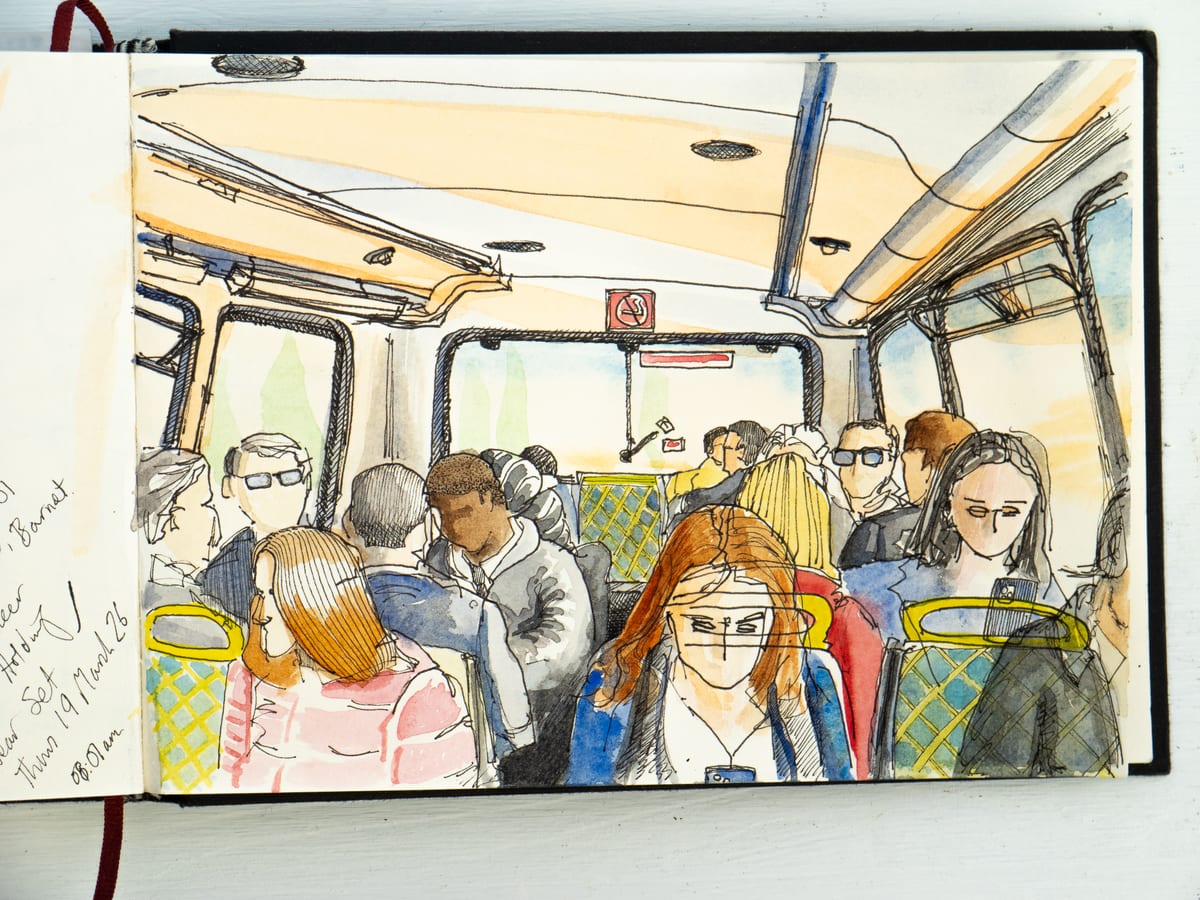
Almost everything I make is pen and ink or pencil — the tools that fit in a bag, that you can use on a folding table, that don't need drying time or a studio. The subjects are the unnoticed spaces inside production: the holding tent before everyone arrives, the costume rail backstage, the view from a location bus, the seconds between takes when nothing is happening and everything is about to.
These are not scenes from the film.
They are the conditions that make it possible. And, in their own quiet way, a record of it.